NASW officers, executive board, and key people
NASW is a volunteer-led professional membership organization, and running for board leadership is a reflection of each candidate’s belief in the importance and role of NASW for its membership and to society — a sense of duty and commitment to volunteer service that has successfully guided the organization for more than ninety years.
Officers
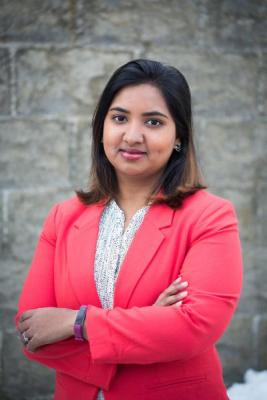
Shraddha Chakradhar | she/her, president
Freelance
LinkedIn
With past career stops at Nieman Journalism Lab, STAT, and Nature Medicine, Shraddha enters her fourth term on the NASW Board, having served as board vice president and chair of the NASW Programs Committee, board treasurer and chair of the NASW Finance and Audit Committee, and as co-chair of the Diversity Committee from 2016-2019.
First elected to the board in 2020
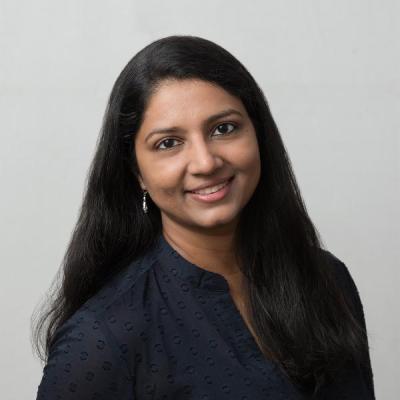
Jyoti Madhusoodanan | she/her, vice president
AHCJ Program Manager LinkedIn
Jyoti is a journalist who covers science and health for The New York Times, Scientific American, Nature, Undark magazine, and many other outlets. She currently works at the Association of Health Care Journalists as program manager, overseeing the organization's various fellowship programs. She has served on the NASW Board since 2020 and has completed terms as Secretary and Treasurer.
First elected to the board in 2020
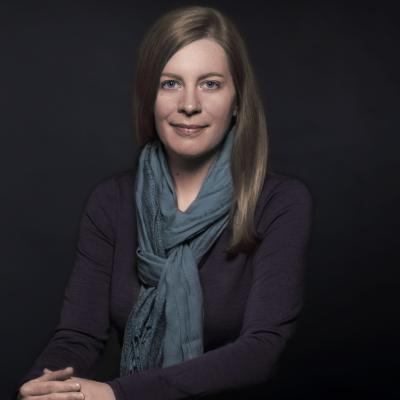
Robin Berghaus | she/her, secretary
Freelance LinkedIn
Robin writes and produces feature articles, documentaries, and podcasts on science, health, medicine, and technology. Her projects have appeared in news outlets, broadcast on NPR stations, on PBS, shown at international film festivals, and as part of Alfred P. Sloan Foundation’s "Science on Screen." She has served as a Ferriss — UC Berkeley Psychedelic Journalism Fellow and a film envoy for American Film Showcase.
First elected to the board in 2026
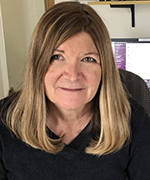
Marilynn Marchione | she/her, treasurer
Chief Medical Writer (Retired) for The Associated Press LinkedIn
Marilynn joined the Associated Press in 2004 after 28 years as a reporter and editor at the Milwaukee Journal Sentinel, the Chicago Sun-Times and the Akron Beacon Journal. She specialized in writing about public health, infectious diseases, cancer, heart disease and the advent of gene-based medicine. In 2010, she won the Victor Cohn Prize for Excellence in Medical Science writing. She retired in 2021. Marilynn has been an NASW board member and on the Finance Committee for six years.
First elected to the board in 2018
Board members-at-large
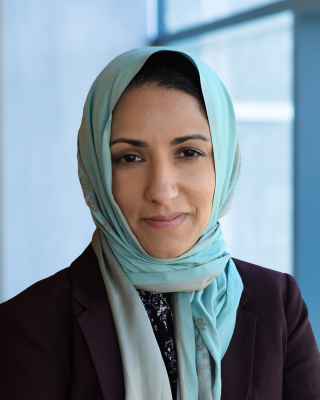
Bushraa Khatib | she/her
Foundation Fighting Blindness LinkedIn
Bushraa Khatib is a Maryland-based science writer and editor with 15 years of experience working for non-profit, public health, and research organizations. She currently serves as Director of Science Communications for the Foundation Fighting Blindness, a non-profit that drives research on treatments for inherited blinding diseases. She has worked in the past for the National Institutes of Health, Truth Initiative, and the A.J. Drexel Autism Institute, among others. This is her first term serving on the NASW board.
First elected to the board in 2026
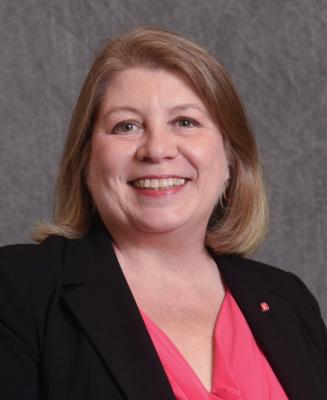
Jennifer Cox | she/her
Freelance
LinkedIn
Jennifer (Jenny) Cox retired as the director of Engineering Communications at NC State University in 2018 after 35+ years as a science writer and PIO. She has since spent time working on a creative nonfiction book about successful STEAM women and underrepresented minorities for middle school children. She has served on the NASW Board (2019-2020), on the Program Committee for the last 10 years and joined the Finance Committee in 2026. She also served as the communications committee chair for the 10th World Conference of Science Journalists in San Francisco in 2017. She serves on the Science Communicators of North Carolina (SCONC) Board of Directors and helped transition SCONC to a 501(c)(3) non-profit. She served on the planning committees for both ScienceWriters 2012 and 2024 annual meetings held in Raleigh, NC, and as a co-organizer for SCONC’s two NASW Peggy Girshman Idea Grants. This is her first full term serving on the NASW Board.
First elected to the board in 2026
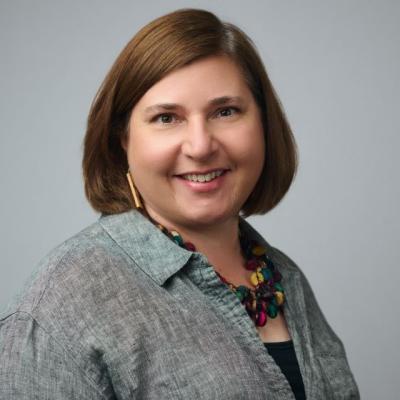
Kate Travis | she/her
Managing Editor of Retraction Watch LinkedIn
Kate Travis is the managing editor of Retraction Watch. Since 2023 she has been the coordinator for NASW's Science in Society Awards. Previously she was the digital director at Science News; managing editor of CASW Connector, a project of the Council for the Advancement of Science Writing; contributing editor at Science Careers and news editor of the Journal of the National Cancer Institute. She has a master's in science and technology journalism from Texas A&M University and lives in Washington, D.C.
First elected to the board in 2026
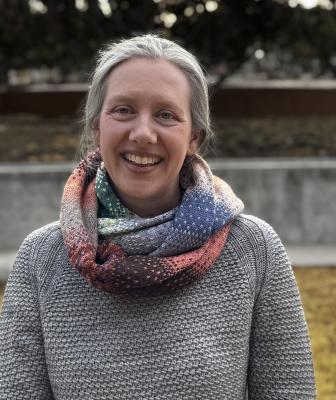
Katie Mast | she/her
Communications Manager for the Santa Fe Institute LinkedIn
Katie Mast leads communications at the Santa Fe Institute, a nonprofit research center in Santa Fe, New Mexico, focused on complexity science. As communications manager, she leads a small team of staff and freelancers to produce stories about research by SFI’s ~150 resident and external faculty and postdoctoral fellows. Prior to joining SFI, Katie was a freelance science writer and fact-checker. This is her second term serving on the NASW Board.
First elected to the board in 2024
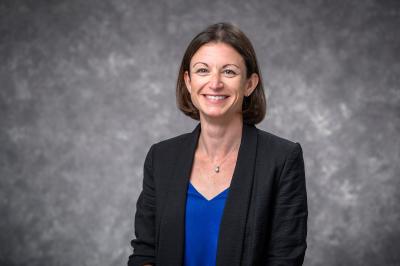
Kelly Tyrrell | she/her
Assistant Vice Chancellor for Content Strategy for the University of Wisconsin-Madison LinkedIn
Kelly Tyrrell leads a team of storytellers, science writers, editors, social media professionals, and other staff at the University of Wisconsin–Madison. She has also worked as a scientist, a staff journalist and a freelancer and is on the editorial team at The Open Notebook, a non-profit focused on the craft of science writing and evidence-based reporting. Kelly is also co-author of a book, “Chasing the Stars”, about the history of Washburn Observatory and astronomy in Wisconsin. This is her third term serving on the NASW Board.
First elected to the board in 2022
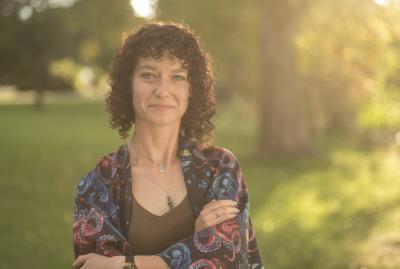
Kenna Hughes-Castleberry | she/her
Content Manager at Live Science
Kenna Hughes-Castleberry is a science writer and currently the Content Manager at Live Science. She is the author of “Octopus X” and has also worked as a freelance journalist. Kenna's beats include animals and animal intelligence, corvids, cephalopods, environmentalism, plants, and technology.
First elected to the board in 2026
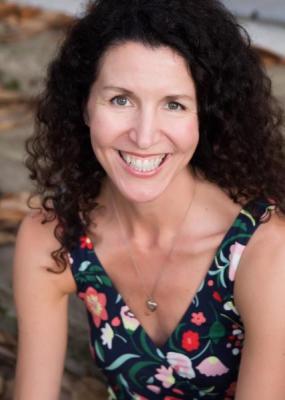
Marla Broadfoot | she/her
Freelance
LinkedIn
Marla Broadfoot is a freelance science writer and editor based in Wendell, North Carolina. Her work has appeared in Scientific American, Knowable, Nature, Smithsonian, STAT, and Science News, among others. Marla is a contributing editor at American Scientist magazine and an alumna of the Rosalynn Carter Mental Health Journalism Fellowship. She also provides communications services to nonprofits, including the Mayo Clinic and the Burroughs Wellcome Fund. Marla holds a PhD in genetics and molecular biology from the University of North Carolina at Chapel Hill. She is a past president of the Science Communicators of North Carolina (SCONC) and has served on the NASW board since 2022.
First elected to the board in 2022
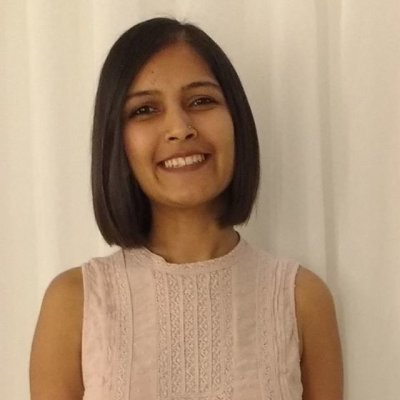
Priyanka Runwal | she/her
Freelance
LinkedIn
Priyanka moved from India to the United States in 2018 to pursue a career in science journalism. Her bylines have appeared in the New York Times, Scientific American, and National Geographic, in addition to covering the COVID-19 pandemic and other health and medicine stories as National Geographic’s resident reporter. Priyanka begins her second term on the NASW Board.
First elected to the board in 2024
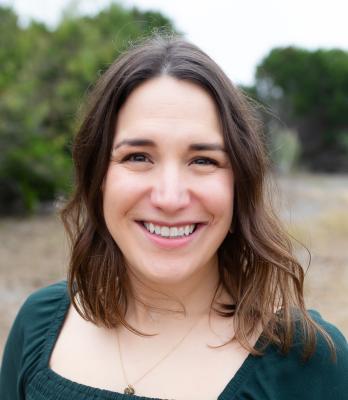
Rachel Zamzow | she/her
Deputy executive director of The Open Notebook LinkedIn
Rachel Zamzow is the deputy executive director of The Open Notebook (TON). There, she manages TON’s slate of programs and communities of practice, oversees editorial production, and engages in strategic planning. As an award-winning independent journalist, she reports stories about neuroscience and scientific communities for Science, Science News, The Transmitter, and other outlets. She has a PhD in neuroscience from the University of Missouri and lives in Waco, Texas.
First elected to the board in 2026
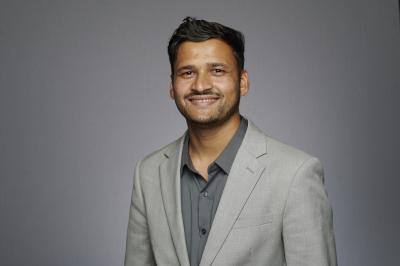
Saugat Bolakhe | he/him
Freelance
LinkedIn
Saugat Bolakhe is a freelance journalist and a science communicator, who regularly writes for Scientific American, Nature, Science News, National Geographic and Knowable. In 2024, he was awarded with the science journalism award by the Nepal Academy of Science and Technology (NAST). He also serves as a program assistant at The Open Notebook where he manages an international Student Slack Community, advising early career science journalists.
First elected to the board in 2026
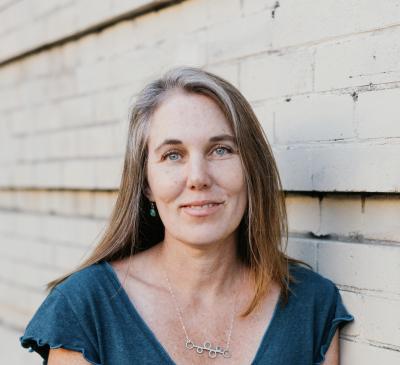
Virginia Gewin | she/her
Freelance
Virginia Gewin is a freelance science journalist based in Portland, Oregon. She writes about climate change, agriculture, air quality and biodiversity for outlets including Nature, Science, Bloomberg, Audubon, Grist, Vox, and others. Over the last decade, she has had journalism fellowships from the Nova Institute for Health, MIT Knight Science Journalism Program, and the Alicia Patterson Foundation. She has been a board member of the Northwest Science Writers Association since 2024.
First elected to the board in 2026
Other key NASW people
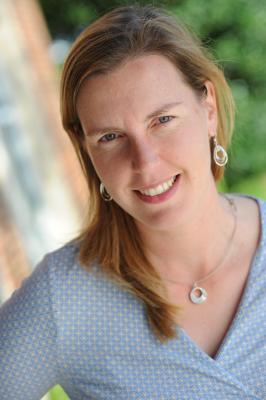
Tinsley Davis, executive director
Tinsley Davis has led the National Association of Science Writers as executive director since 2008. Tinsley represents NASW’s interest in a variety of collaborative efforts, including the Authors Coalition, where she was Finance Committee chair from 2018-2020, and the Societies Consortium on Sexual Harassment in STEMM. She brokered the development of the first ScienceWriters meeting in 2006. Under her leadership, this annual joint conference with the Council for the Advancement of Science Writing has grown steadily, bringing together 500 to 800 science writers together each year for professional development sessions, science briefings, and field trips. Tinsley leads NASW’s presence in the international community and co-organized the 10th World Conference of Science Journalists in San Francisco, which attracted 1,200 international science journalists and communicators. She was elected as a Fellow of the American Association for the Advancement of Science (AAAS) in 2020. Previously, Tinsley worked at the Gordon Current Science & Technology Center at the Museum of Science in Boston on novel methods to engage adult audiences with science news. A former microbiologist, she holds an M.S. in Bacteriology from the University of Wisconsin-Madison.
The executive director is NASW's Digital Millennium Copyright Act (DMCA) agent.
Office address:
National Association of Science Writers, Inc.
P.O. Box 7905
Berkeley, CA 94707
Phone: (510) 859-7229
NASW is an equal opportunity employer. View our Equal Employment Opportunity and Harassment Policy.
ADVERTISEMENT