The National Association of Science Writers and its Awards Committee are pleased to announce the winners of the 2026 NASW Science in Society Journalism Awards. This year, NASW is awarding prizes in six categories: Books, Science News (formerly Science Reporting), Science Features, Longform Narratives, Series, and Commentary. The winners are:
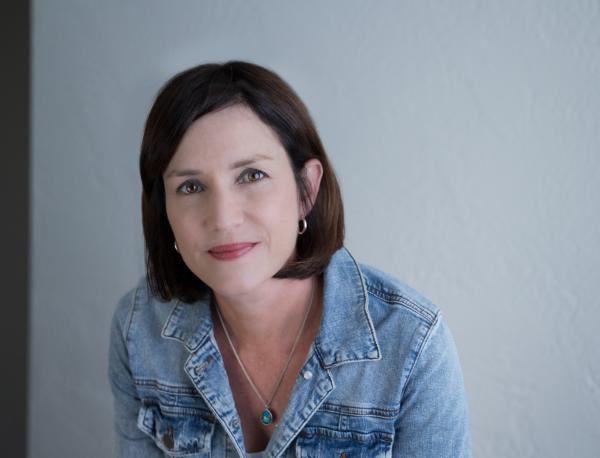
- In the Books category, Valley of Forgetting by author and neuroscience and medicine journalist Jennie Erin Smith, now at Science.
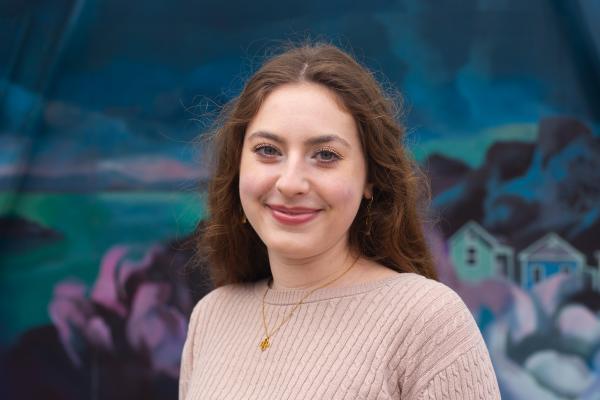
- In the Science News (formerly Science Reporting) category, “In red states, many academic researchers feel fear–and resolve by science journalist Hannah Richter for Science.
- In the Science Features category, “Texas Banned Abortion. Then Sepsis Rates Soared” by journalists Lizzie Presser, Andrea Suozzo, Sophie Chou and Kavitha Surana for ProPublica.
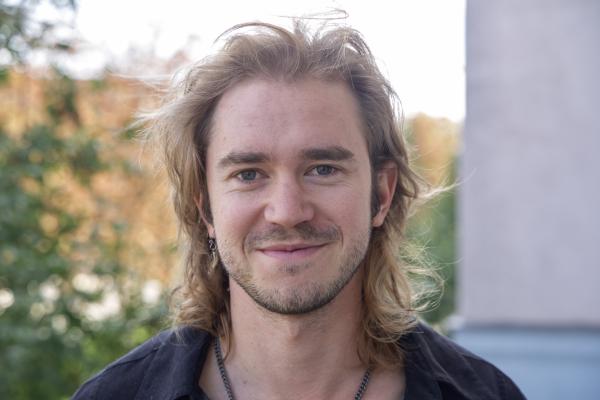
- In the Longform Narratives category, “How Climate Scientists Saw the Future Before It Arrived” by science journalist Zack Savitsky for Quanta Magazine.
- In the Series category, “The Poisonous Lead Trade” by journalists Will Fitzgibbon, Peter S. Goodman and Samuel Granados for The Examination and The New York Times.
- In the Commentary category, “Carbon Capture Scale Up Brings New Problems to the Midwest” by science and environmental journalist Christian Elliott for Undark.
The award winners in each category will receive or share a cash prize of $2,000. The 2026 NASW Awards will be presented on Sunday, Sept. 27, in Corvallis, Oregon, as part of the ScienceWriters2026 national conference. Follow hashtags #SciWri26 and #SciWriAwards on social media for ongoing awardee celebrations.
Credit: Seth Robbins
The judges called Valley of Forgetting “an extraordinary work of journalism,” praising the depth of Smith’s reporting during the many years she spent in Colombia and the fact that her work sheds light on the ambiguous ethics involved in a large clinical trial on a vulnerable population. “Smith weaves the stories of scientists and subjects together into a compelling, deeply human narrative,” the judges said. “While the story is unflinching and sometimes painful, the author tells it with compassion for all.” The judges noted that the book offers a rare look into the lives of patients and research subjects, and asks what is owed to them in the end. “This book should be required reading for any doctor or scientist engaged in clinical trials, and any patient considering enrolling in one,” they said.
Credit: Sophie Hartley
The judges were struck by the many rich details in Richter’s reporting, which ultimately forge a clear, strong and nuanced picture of the reality of being a researcher in states that have passed laws banning diversity, equity and inclusion programs, restricting faculty protections, and limiting course topics. To capture these diverse experiences, Richter interviewed several researchers – from graduate students to faculty. “Hannah Richter’s investigation of how researchers are faring in more than half a dozen Republican-led states shows clearly how politics is affecting scientists and teachers at all stages of their careers – and gives a glimpse of how those scientists cope with increasingly difficult circumstances,” the judges said.

The judges hailed this “powerhouse team of reporters” and their use of data analysis to show the public health effects of Texas' abortion ban. “With the state failing or refusing to adequately study the ramifications of its own policies, these journalists have done that work for them,” the judges said. “They reveal an alarming spike in maternal sepsis rates — and remind us of the vital societal role science journalism can play.”
Credit: Sofia Quaglia
“The piece brings the history of climate modelling to life, and helps readers understand its critical importance at this peculiar point in history,” the judges said. The story takes on particular urgency under the second Trump administration, which has slashed funding for climate science even as the world hits new temperature records. Savitsky points out that Trump’s proposed budget would shutter the Geophysical Fluid Dynamics Laboratory in Princeton, New Jersey. “Before reading this article, most people would shrug and say 'who cares?’” the judges note. “After reading it, they’ll be fighting to keep it open.”
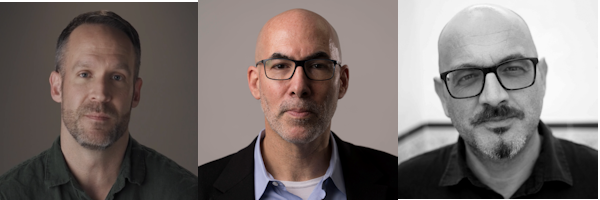
While auto manufacturers pitch their use of recycled lead in car batteries as an environmental triumph, this series tells a different, darker story. "The Poisonous Lead Trade," reveals the shocking levels of exposure in the people working and living around lead-recycling plants in places like Ogijo, Nigeria. “Not only did these journalists offer blood tests to community members to generate data where little previously existed, they also delved into the industry behind this catastrophe and the stories of the people who are most affected,” the judges said. “This is science journalism at its most impactful.”
Credit: Summer Lawrence
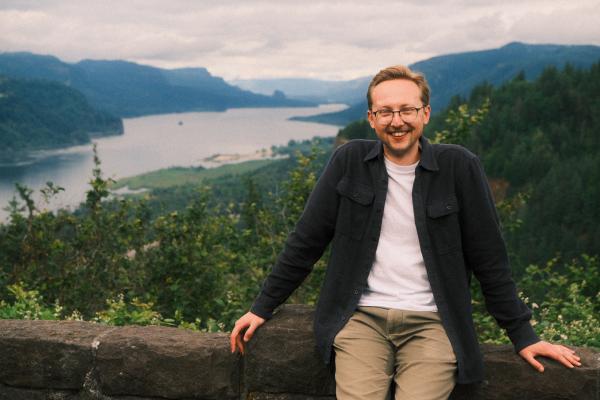
The use of the technology has been bolstered by lucrative government subsidies and enticing tax breaks under the Biden administration. Though the future of the subsidies is unclear, the ethanol industry especially is geared to ramp up storing their carbon dioxide byproducts deep underground. “Combining reportage with personal experience, Elliott tells a nuanced story about not just the potential risks that the carbon sequestration plants pose to the environment, but also about how policy decisions about corn, ethanol, and climate are changing us,” the judges said.
In addition to the 2026 Science in Society Award winners, the judges would like to recognize entries that were finalists in the competition:
Finalists in the Books category:
- Apocalypse by author and science journalist Lizzie Wade, published by Harper.
- They Poisoned the World: Life and Death in the Age of Forever Chemicals by author and investigative journalist Mariah Blake, published by Crown Publishing.
Finalist in the Science News category:
- “RECOVER grants for Long COVID pathobiology research are among those cut under new NIH directive” by co-founder and managing editor Betsy Ladyzhets, with additional reporting by co-founder and executive editor Miles Griffis for The Sick Times.
Finalist in the Science Features category:
- “This machine could keep a baby alive outside the womb. How will the world decide to use it?” by science journalist Lucy Tu for The Guardian, US edition.
Finalist in the Longform Narratives category:
- “The Price of Remission” by healthcare investigative journalist David Armstrong for ProPublica.
Finalists in the Series category:
- “Standard of Fear,” by staff writers Lauren Caruba and Marin Wolf for The Dallas Morning News.
- “Rx Roulette: The FDA’s Dangerous Gamble on America’s Drugs” by investigative journalists Debbie Cenziper, Megan Rose, Brandon Roberts and Irena Hwang for ProPublica.
Finalist in the Commentary category:
- “The Real Reason People Don’t Trust in Science Has Nothing to Do with Scientists” by science journalist and former senior editor Dan Vergano, for Scientific American.
The NASW Awards Committee is co-chaired by Charna Albert (College of American Pathologists) and Aparna Vidyasagar (freelance). The Science in Society Journalism Awards were coordinated by Vidyasagar and Kate Travis (Retraction Watch), with the final judging committee consisting of Eric Boodman (STAT), Barbara Moran (WBUR) and Charles Seife (NYU).
In addition to the final judging committee, NASW thanks the volunteers who served on the preliminary judging committees: Jennifer Abbasi (JAMA Medical News), Jill Adams (freelance), J.D. Allen (Stonybrook University), Viviane Callier (freelance), Michael Carlowicz (freelance), Lakshmi Chandrasekharan (freelance), Anne Connor (freelance), Marianne Guenot (freelance), Desiree Hagen (KOTZ), Dani Leviss (freelance), Heidi Opdyke (Carnegie Mellon University), Sushmita Pathak (Scientific American), Ranjini Raghunath (Indian Institute of Science), Elliot Richman (freelance), Shannon Shea (Department of Energy, Office of Science), Diana Steele (freelance), Nancy Volkers (International League Against Epilepsy).
Finally, NASW thanks the volunteers who screened this year’s awards entries: Eric Bender (freelance), Joseph Caputo (Arc Institute), Dani Leviss (freelance), Ben Nathanson (freelance), Elizabeth Pennisi (freelance), Ranjini Raghunath (Indian Institute of Science), Michael Reinemer (Outdoor America), Ariana Remmel (BirdNote Daily), Elliot Richman (freelance), Erin Rode (freelance), Thomas Sumner (freelance), Hannah Thomasy (The Scientist), John Travis (Science), Veronica Tremblay (freelance).
First awarded in 1972, the NASW Science and Society Journalism Awards were established to recognize investigative or interpretive reporting about the sciences and their impact on society. Intended to encourage critical, probing work that would not receive an award from an interest group, NASW presents these journalism awards without subsidy from any professional or commercial interest. The annual Science in Society Journalism Awards honors have highlighted innovative reporting shaped by a diverse variety of perspectives — going well beyond the research findings and considering the associated ethical problems and social effects. The awards are especially prestigious because they are judged by accomplished peers.
Entries for the next awards cycle, recognizing material published or broadcast in 2026, are due Feb. 1, 2027. Entry forms will be available at https://www.nasw.org/awards/sis beginning December 2026.
All NASW awards strive to showcase timely coverage and exemplary work, particularly those by underrepresented creatives tackling diverse, overlooked issues and communities. Judges especially consider diversity in topics, sources, audience, and authors to be a critical component of excellence. Nominations are not limited to the NASW membership, and media professionals are encouraged to submit entries on behalf of peers, colleagues, and mentees.
Founded in 1934 with a mission to fight for the free flow of science news, NASW is an organization of ~2,400 professional journalists, authors, editors, producers, public information officers, students and people who write and produce material intended to inform the public about science, health, engineering, and technology. To learn more, visit www.nasw.org and follow NASW on LinkedIn and Bluesky.