This student story was published as part of the 2026 NASW Perlman Virtual Mentoring Program organized by the NASW Education Committee, providing science journalism experience for undergraduate and graduate students.
Story by Zoe Beketova
Mentored and edited by John Cannon
An upset child isn't most people's idea of a beautiful moment. But for Dana Suskind, it is.
"Even if it's a kid screaming on an airplane with a parent trying to shush them, there's just something beautiful about that connection," said Suskind, a cochlear implant surgeon and social scientist at the University of Chicago.
That connection — the constant back-and-forth between parents and children — is at the center of a new working paper by Suskind and her colleagues. Understanding how children develop language and social-emotional skills is a mammoth task of data analysis, so the team turned to machine learning to help them out.
Language development in a child's first few years predicts many future outcomes, from academic performance to reading comprehension. Birth to age three is considered a critical window for brain development, and by age five, the brain has already reached almost 90% of its adult size.
Yet, despite decades of research, scientists don’t know exactly how children acquire these skills, or what interventions could reliably improve language acquisition.
"There are so many things that go into the development of a human being," Suskind said. "Human connection is so multifaceted. This is one little, tiny speck of many things that influence human development."
The data problem
Collecting and analyzing data on language development has long been a barrier to research. Recording and parsing through thousands of hours of parent-child interactions is slow, typically requiring scientists to manually annotate audio files one at a time.
That's where machine learning comes in. Suskind's team uses an algorithm to process acoustic features of parental speech — the pitch, clarity, flatness and other markers tied to emotion — to cut down on the manual labor. This increase in efficiency could allow researchers to analyze larger sample sizes of children with a variety of language skill levels and backgrounds, in turn leading to more reliable conclusions.
"It's just the beginning of trying to get under the hood of human development," Suskind said. "Thus far, we've been limited by our tools, and we are trying to get more granular."
The hope is that this AI-powered analysis can generate larger, more reliable datasets than those that researchers could ever collect by hand to inform support systems for families.
Jennifer Magnuson, a licensed speech-language pathologist and postdoctoral fellow at the University of Maryland who was not involved in the study, pointed out that this type of research can be the difference between a child getting help or not.
"It can be really hard to justify early intervention to people like insurance companies if a child does not have a diagnosis, and I think that's why research is really valuable," Magnuson said.
Language support for children without a learning difficulty diagnosis is important as Magnuson notes that average language development spans a large range of skills.
"There have been some studies showing that children who are on the lower end of average tend to have less success in their careers or academically than children or adolescents who have typical scores on the higher end of average," Magnuson said. "So, it's a question beyond just, do you have a disability or not?"
The timing matters too. By third grade, children are no longer being taught to read in the U.S. Instead, they're expected to read in order to learn other subjects. Children who fall behind before that point can struggle to catch up, meaning well-designed interventions could help these groups too.
Where AI falls short
Children, but also adults, often talk in fragmented, incoherent bursts, restarting sentences mid-thought in ways that are hard for machines to decipher. Cultural and regional differences in speech patterns can add another layer of difficulty. While machine learning can scale up our research efforts into language development, scientists warn that we are a ways off from consistent, reliable AI analysis.
Speech is also only one piece of a much larger puzzle in human connection. Julie Pernaudet, an economist at the University of Chicago and co-author of the paper, noted the limits of what voice analysis alone can capture.
"This paper focuses on voice, but there is the eye contact, the touch in the parent-child interaction," Pernaudet said. "There's a lot more happening. It's really a limited lens."
Outside factors further complicate the picture. Magnuson noted that, for example, a child’s vocabulary development is heavily shaped by socioeconomic status and parental education. Such variables cannot be fully disentangled from parent-child interaction data.
Despite the complexity of this research, one intervention for improving language and social-emotional skills known as the 3Ts shows promise:
· Tuning in: actively taking interest in what the child is interested in
· Talking more: narrating and describing actions and objects in the child's environment
· Taking turns: inviting the child to respond and participate in conversation
Teaching parents this simple framework has been shown to improve children’s language skills. Improvements vary in their presentation: from a bigger vocabulary, to more complex sentences, to a child who is simply better able to engage with peers and play. Magnuson highlighted that there is still a lot to research with these types of interventions, because, for yet-unknown reasons, the effects do not always last.
"Everything for us has this larger goal of supporting parents and teachers in their important role," Suskind said.
As AI tools mature, scientists hope they'll offer a more informed window into the development process to provide support.
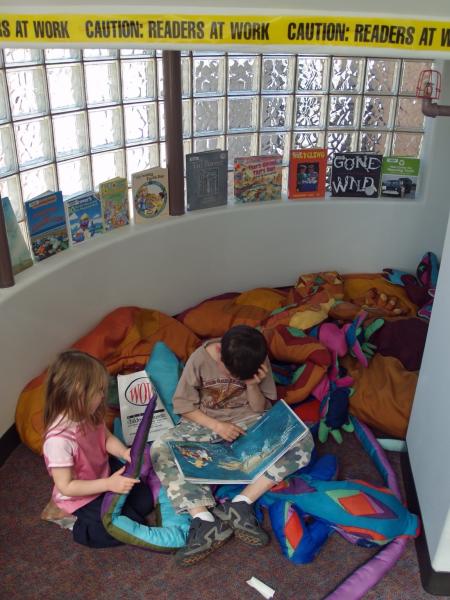
Main Header Image Caption: Children learning in a classroom. Credit: Adam Patterson,Panos, DFID - UK Department for International Development via Flickr under CC BY 3.0.

Zoe Beketova is a health journalist based in New York City covering physical and mental health. You can email her at zoebeketova@gmail.com
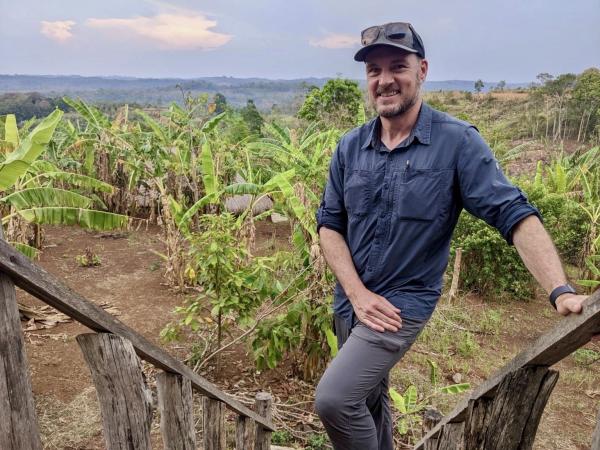
John Cannon is a features writer at Mongabay, where he covers the environment and conservation and has been on staff since 2016.
The NASW Perlman Virtual Mentoring program is named for longtime science writer and past NASW President David Perlman. Dave, who died in 2020 at the age of 101 only three years after his retirement from the San Francisco Chronicle, was a mentor to countless members of the science writing community and always made time for kind and supportive words, especially for early career writers.
You can contact the NASW Education Committee at education@nasw.org. Thank you to the many NASW member volunteers who lead our #SciWriStudent programming year after year.
Founded in 1934 with a mission to fight for the free flow of science news, NASW is an organization of ~ 2,600 professional journalists, authors, editors, producers, public information officers, students and people who write and produce material intended to inform the public about science, health, engineering, and technology.