We Remember: NASW Pens at Rest
Commemorating members of our NASW community no longer with us.
Whales fertilize the ocean with their poop. Forest elephants eat small fast-growing trees, helping larger slow-growing trees flourish. In Animal Climate Heroes!, Alison Pearce Stevens urges readers aged 8 and up to become climate heroes, too, by cutting back on single-use plastics, encouraging their families to buy local, planting a vegetable garden, and choosing to bike rather than riding in a car.
NASW funding provided seven early career science writers with a needed boost to complete their summer 2023 training experiences.
On April 8, the moon’s shadow will sweep over North America from Mexico across Texas to New England into Canada. Some 32 million people will see a total eclipse. This “precious shared experience,” David Baron suggests in a new edition of American Eclipse: A Nation's Epic Race to Catch the Shadow of the Moon and Win the Glory of the World, may boost recognition of commonalities in our divided nation.
2024 marks the 90th anniversary of the founding of the National Association of Science Writers — and NASW members are sharing their stories and memories in celebration.
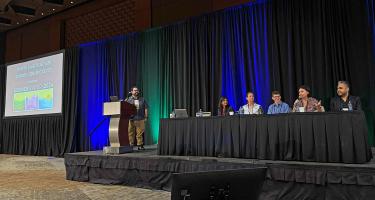
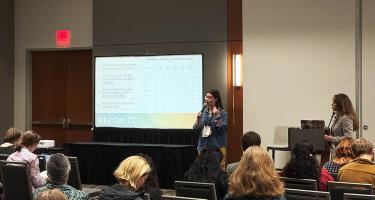
NASW's Education Committee paired students with professional science writers for a mentorship program held during the 2024 AAAS Annual Meeting in Denver, Colo.
Jocelyn Bell Burnell discovered pulsars, but the 1974 Nobel Prize for Physics went to her male academic advisor—not a unique story. In She Can STEM: 50 Trailblazing Women in Science from Ancient History to Today, Liz Lee Heinecke chronicles 50 women scientists’ successes and struggles. Each account includes a guide to help readers ages 7-12 conduct topic-related experiments of their own at home.
The National Association of Science Writers (NASW) Board of Directors lends support to the National Writers Union comments to the U.S. Copyright Office.
Feb. 27, 2024