
The NASW Grants Committee is now accepting applications for 2017-2018 Peggy Girshman Idea Grants for projects from $1,000 to $25,000. Applications are due on December 15, 2017. Read more for application instructions and helpful hints.
Featured news
The Grand Canyon in Arizona occupies about triple the area of the world’s ten smallest countries. Land used for farmland worldwide would fill an area about 10,000 times that of the Grand Canyon. In Magnitude: The Scale of the Universe, Kimberly Arcand and NASW member Megan Watzke show how scientists reliably distinguish large from small, fast from slow, hot from cold, far from near, and much more. Using everyday experiences and extensive color illustrations, Arcand and Watzke explain how orders of magnitude enable us to make sense of the world around us.
Science writer Brian Vastag is taking part in an intense experiment aimed at finding out if and how an infection may have disrupted his nervous system, leaving him with myalgic encephalomyelitis, commonly known as chronic fatigue syndrome, or ME/CFS.
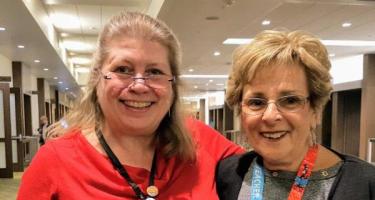
Are you living or working in Texas, New Mexico, Oklahoma, Arkansas or Louisiana? Thanks to an NASW Idea Grant awarded to some of your creative colleagues in Austin, Texas, the first SciCommSouth meetup for writers and communicators in the South Central region will take place in Austin on Jan. 13. Register by Nov. 15 for the early bird rate.
“Once I started looking, I found jellyfish stories everywhere,” Juli Berwald writes in Spineless: The Science of Jellyfish and the Art of Growing a Backbone. “I spent hours reading about their shape, how they swim, what they eat, whether they think, how they reproduce, how they sting, how they glow.” Berwald traveled the globe to observe and swim with jellyfish, and talk with scientists working with them. Her odyssey — an instructive guide to researching and writing a book — provides a first-hand look at the lives of the historically understudied jellyfish, and perspective on the likely future of our oceans.
Adding a new voice to the growing offerings of online science journalism, Annual Reviews is launching a digital magazine. Knowable Magazine uses various forms of storytelling to explore the life, physical, and social sciences. The magazine debuts at WCSJ2017.
With 1,364 delegates from 70+ countries, the 10th World Conference of Science Journalists in San Francisco is looking to be a great event. Registration has closed, and there are no late or onsite registrations. Follow #wcsj2017 for updates from afar.