
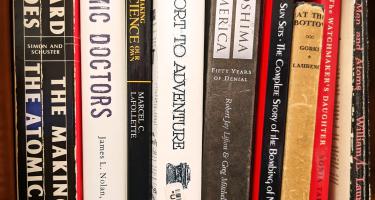
William Laurence, New York Times science writer and, from 1956-’64, NYT science editor, received two Pulitzer Prizes. In 1934, he helped launch NASW. He also took money from sources to skew stories, Vincent Kiernan asserts in Atomic Bill: A Journalist’s Dangerous Ambition in the Shadow of the Bomb. Laurence focused on serving himself, Kiernan maintains, not the NYT or his readers.
SciWri22 travel grantee Hosen Arman reports on the "Science in Sacred Spaces: An Interfaith Dialogue on Science Communication with Faith Communities" NASW workshop session presented online, organized by Ciara Reyes-Ton and Katy Hinman.
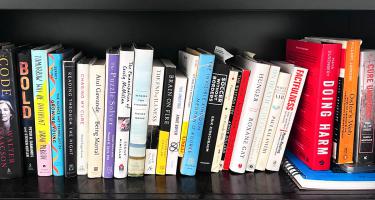
Lingering, often disabling Covid symptoms have spurred attention to aftereffects of Chronic Lyme, ME/CFS, & other persistent diseases, Ryan Prior notes in The Long Haul: Solving The Puzzle of the Pandemic’s Long Haulers and How They Are Changing Healthcare Forever. “Studying why some people get sick and stay sick,” he says, “could be one of the greatest scientific opportunities of our lifetime.”
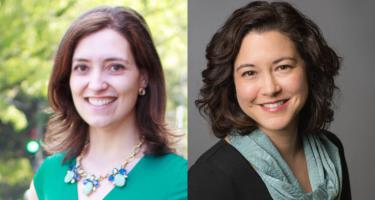
The National Association of Science Writers awards its 2022 NASW Diane McGurgan Service Award for member volunteerism to Carmen Drahl and Ellen Kuwana.
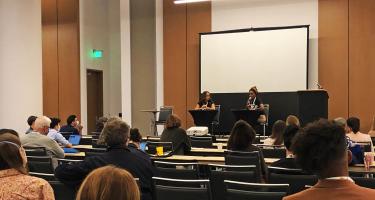
SciWri22 travel grantee Alex Viveros reports on the “Gun Violence, Community Trauma, and the Journalist’s Role: A Memphis Conversation" community discussion in Memphis co-organized by the Council for the Advancement of Science Writing.
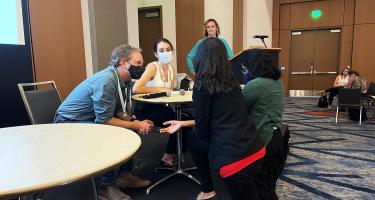
SciWri22 travel grantee Jude Coleman reports on the "What Do You Mean By That? Interviewing For Narrative Science Stories" NASW workshop session in Memphis organized by Katharine Gammon.
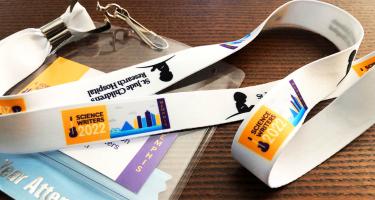
SciWri22 travel grantee Ling Xin reports on the "Abortion and Science Reporting" NASW workshop session presented online, organized by Amy Maxmen.
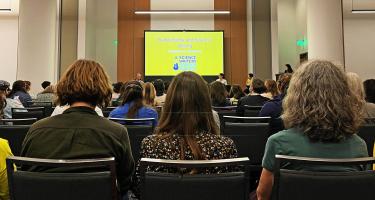
SciWri22 travel grantee Emily Shepherd reports on the "Synecdoche and Science Writing" NASW workshop session in Memphis organized by Maya L. Kapoor.