
Mid-career mentoring seminar 6: From writer to editor. May 26, 2022. Featuring Siri Carpenter and Rachel Zamzow. Organized and moderated by Bethany Brookshire and Rodrigo Pérez Ortega on behalf of NASW's Journalism Committee. This video was produced for NASW members and should not be distributed or screened elsewhere.
Featured news
Mid-career mentoring seminar 5: Expanding your skillset. May 12, 2022. Featuring Tiên Nguyễn and Priyanka Runwal. Organized and moderated by Bethany Brookshire and Rodrigo Pérez Ortega on behalf of NASW's Journalism Committee. This video was produced for NASW members and should not be distributed or screened elsewhere.
Mid-career mentoring seminar 4: Contracts and negotiations. April 28, 2022. Featuring Kendall Powell and Shannon Palus. Organized and moderated by Bethany Brookshire and Rodrigo Pérez Ortega on behalf of NASW's Journalism Committee. This video was produced for NASW members and should not be distributed or screened elsewhere.
Mid-career mentoring seminar 3: Career pivots. April 14, 2022. Featuring Roxanne Khamsi and Richard Stone. Organized and moderated by Bethany Brookshire and Rodrigo Pérez Ortega on behalf of NASW's Journalism Committee. This video was produced for NASW members and should not be distributed or screened elsewhere.
Mid-career mentoring seminar 2: Work/life balance. March 31, 2022. Featuring Lila Guterman and Laurel Hamers. Organized and moderated by Bethany Brookshire and Rodrigo Pérez Ortega on behalf of NASW's Journalism Committee. This video was produced for NASW members and should not be distributed or screened elsewhere.
Mid-career mentoring seminar 1: The mid-career resume. March 17, 2022. Featuring Karl Bates and Amanda Mascarelli. Organized and moderated by Bethany Brookshire and Rodrigo Pérez Ortega on behalf of NASW's Journalism Committee. This video was produced for NASW members and should not be distributed or screened elsewhere.
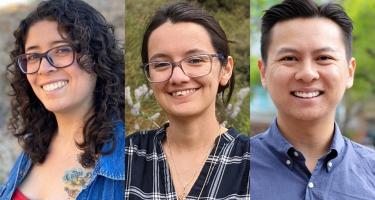
Three rising science writers receive 2022 NASW Diversity Summer Fellowships
Funding from the National Association of Science Writers is providing promising trainees with supplemental stipends to pursue their journalism training.

Lisa L. Lewis —The Sleep-Deprived Teen: Why Our Teenagers Are So Tired, and How Parents and Schools Can Help Them Thrive
Teens need 8-10 hours of sleep each night, but few get it. Schools start too early, Lisa L. Lewis says in The Sleep-Deprived Teen: Why Our Teenagers Are So Tired, and How Parents and Schools Can Help Them Thrive. Biological clocks push teens to stay up ‘til 11 pm. A practical remedy: start schools later. Lewis helped prompt a Calif. law mandating 8:00 am middle & 8:30 am high school start times.

2022 Idea Grants will nurture career transitions and regional networking
Two projects will receive NASW Idea Grants funding in 2022 to kickstart career development and networking programs serving science writers.