Science communicators receive institutional writing awards
Five science communicators producing work in a variety of media were recognized with NASW’s 2021 Excellence in Institutional Writing Awards.
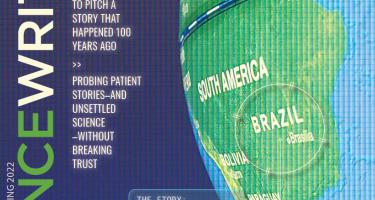
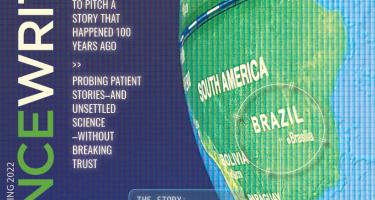
Uncertainty pervades science, and the field of medicine is no exception. Mysteries create a unique challenge for reporters who must wade through murky memories, conflicting patient accounts, and unresolved scientific questions.
We’ve all heard of Throwback Thursday, but what happens when science writers want to tell stories that happened in the more distant past? The #SciWri21 session “How (And why) to pitch a story that happened 100 years ago” brought new perspectives to this topic.
Science writers may have to dig through the authors list for local voices, interview people in an unfamiliar language, or find big-picture experts to contextualize research.
Read the Winter/Spring 2022 issue of ScienceWriters magazine.
When Florence Williams’ husband left her after 25 years of marriage, she felt bereft, lost 20 lbs., and had trouble sleeping. “People who have suffered lost love face an elevated risk of serious medical woes, including sudden heart attacks,” she reports. In Heartbreak: A Personal and Scientific Journey, Williams explores heartbreak’s impact on mind and body and tactics that helped her recover.
Birds don’t see glass; some crash into skyscrapers and die. Free-ranging cats find birds easy prey. Pesticides harm insects essential to birds’ diets. In Where Have All the Birds Gone: Nature in Crisis, Rebecca Hirsch describes bird-friendly building and lighting tactics adopted by some cities, wetlands restoration, endangered species laws, and other efforts to save dwindling bird populations.
Balancing two intertwined forks on a toothpick resting on the edge of a glass helps kids understand Isaac Newton’s concept of gravity. Homemade slime helps illustrate Lise Meitner’s recognition of nuclear fission. In The Kitchen Pantry Scientist: Physics for Kids, Liz Heinecke introduces young readers to 25 physicists & provides photo-illustrated guides to home experiments based on their work.