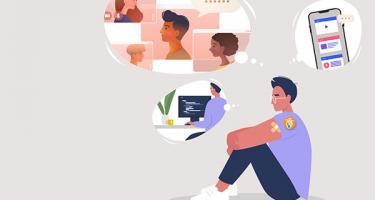
How can you best improve your cognition, creativity, attention, memory, and mood? Don’t rely on weird diets, drugs, or listening to Mozart, Emily Willingham says. To boost brainpower, interact with others, seek new experiences, and get enough sleep and exercise, she asserts in The Tailored Brain: From Ketamine, to Keto, to Companionship, A User's Guide to Feeling Better and Thinking Smarter.
Inside the December, 2021 issue: 'Tis the season to submit an award entry! Apply for an Idea Grant, volunteer for a committee, meet a new member, & more.
Cryptozoology has a bad rep. Wikipedia calls it a pseudoscience fixated on Bigfoot and other fantasy creatures. Think instead, Matt Bille says, of Alan Rabinowitz, Robin Baird, and others who use established zoological methods to study “hidden” animals and identify new species. In Of Books and Beasts: A Cryptozoologist's Library, he reviews 400 books exploring scientific research in the field.
Alex Baluku, a journalist based in Western Uganda and a new addition to the NASW community, shares #WhySciWri in this short Q&A.
Is it safe for babies to share their parents’ bed? Do pacifiers interfere with breastfeeding? Are organic baby foods better than those that are conventionally grown? Which vaccine information sources are most trustworthy? In The Science of Mom: A Research-Based Guide to Your Baby's First Year, 2nd Ed., Alice Callahan provides authoritative answers to these and other parenting questions.
In this informal conversation, several authors whose books came out in the past year share their experiences with book marketing in the time of pandemic.
Congratulations to Sayantan Datta, Andrew Meissen, and Duy Linh Tu, on being selected as recipients of NASW’s 2021 Diversity Reporting Grants.