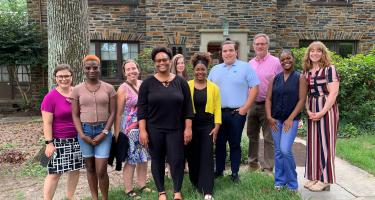
2023 NASW Diversity Summer Fellowships provides promising trainees with supplemental stipends to pursue science writing careers
Seven rising talents receive funding from the National Association of Science Writers
Baby animals help scientists explore important questions: How do genes influence health? Which environmental factors support—or obstruct—life? Learning how babies grow, Danna Staaf asserts In Nursery Earth: The Wondrous Lives of Baby Animals and the Extraordinary Ways They Shape Our World, will help us understand and treat nearly all health problems, and someday even mend damaged body parts.
Anna, a North Dakota homesteader in the early 1900s, left her family mineral rights to land with potential oil and gas reserves. Anna’s great-granddaughter Erika Bolstad worried about the land-grab behind those rights & their possible environmental impact. In "Windfall: The Prairie Woman Who Lost Her Way and the Great-Granddaughter Who Found Her," Bolstad explores family roots & devises a solution.
In 1938, botanists Elzada Clover and Lois Jotter became the 1st non-native women known to transverse the Grand Canyon by boat. In their 43-day, 600-mile trip down the perilous Colorado River, they collected diverse plant specimens and took notes that set botanical benchmarks, Melissa Sevigny reports in Brave the Wild River, The Untold Story of Two Women Who Mapped the Botany of the Grand Canyon.
The National Association of Science Writers announces its new Science Writers Roundtable public events series.
The National Association of Science Writers (NASW) Board of Directors issues a statement on recent layoffs and contractions across the journalism industry in 2023.
The Science Writers Roundtable public events series is brought to you by the NASW Board of Directors.