
Desk Notes Newsletter, 2023 Link Archives
Links to 2023 editions of the NASW Desk Notes Newsletter.
Links to 2023 editions of the NASW Desk Notes Newsletter.
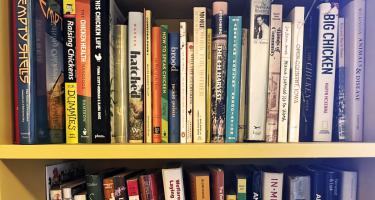
Yes, some chickens can fly! Some sing after laying eggs. Some purr when happy. Chickens make and keep friends, too, and grieve when pals die, Tove Danovich reports in Under the Henfluence: Inside the World of Backyard Chickens and the People Who Love Them. While industrial farms prompt concerns about animal welfare, 3500 years of chicken history, she asserts, offer much to crow about.
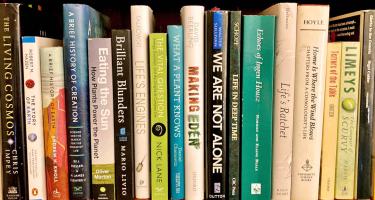
“All matter—everything around and within us—has an ultimate birthday: the day the universe was born,” Dan Levitt writes in What's Gotten Into You: The Story of Your Body's Atoms, from the Big Bang Through Last Night's Dinner. In reporting how we became who we are, Levitt illuminates the lives and struggles of the scientists who discovered how the past remains alive in the present.

The National Association of Science Writers has provided financial support for the upcoming 12th World Conference of Science Journalists hosted by Colombia.

The National Association of Science Writers invites applications for its inaugural Pivot Grants, providing funding for science journalists and writers facing unexpected challenges and transitions.
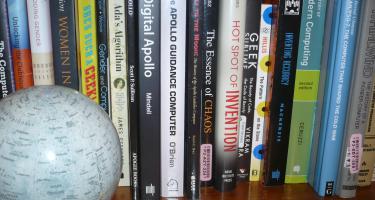
In thousands of hours of manned spaceflight, all dependent on computers, the Apollo Guidance Computer never failed. In an era when men dominated computers and spaceflight, Margaret Hamilton and her team wrote AGC’s software. Richard Maurer interviewed Hamilton and tells her story for readers age 10-14 in The Woman in the Moon: How Margaret Hamilton Helped Fly the First Astronauts to the Moon.

The National Association of Science Writers invites applications for its 2023 Diversity Summer Fellowships, providing funding to supplement a trainee's summer internship stipends.

This latest NASW Virtual Business Chat is brought to you by the NASW Advance Copy column.
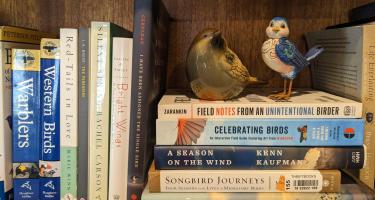
Where do birds go when seasons change? A 17th-century theory posited they flew to the moon. Researchers today use radar, satellites, light-level geolocation, DNA, data from community bird-watchers, and more to track and understand migration patterns, as Rebecca Heisman details in Flight Paths: How a Passionate and Quirky Group of Pioneering Scientists Solved the Mystery of Bird Migration.