
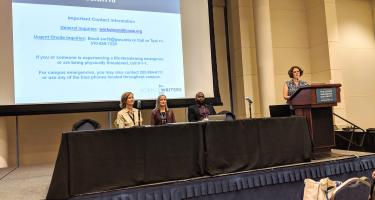
NASW business meeting
Committee updates, awards, and discussion of two constitutional amendments marked this year's business meeting at ScienceWriters 2018.
Committee updates, awards, and discussion of two constitutional amendments marked this year's business meeting at ScienceWriters 2018.
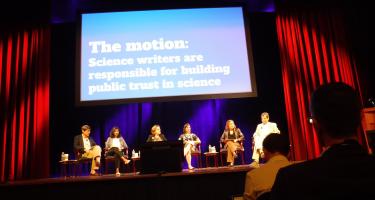
Cheerleader, critic, both, or neither. What is the role of the journalist, and more specifically, the science writer?
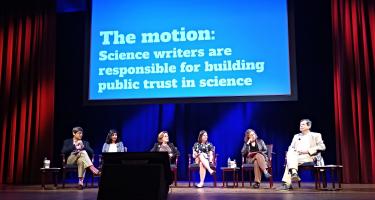
Science writers can play a role in building public support for science, but is that their responsibility?
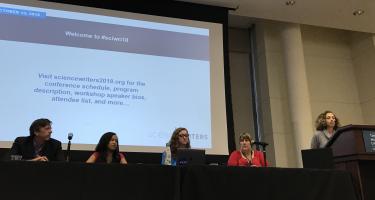
What are the benefits of having a beat in science journalism? What are the drawbacks? And how do you become an established beat reporter in a certain area?
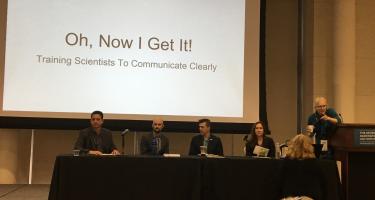
How do you persuade a scientist to engage with the public? This was the topic of the "Oh now I get it" workshop of ScienceWriters 2018.
You've just found yourself in the manager's seat. Maybe your mind is racing with thoughts. "How in the world did I get here?" "What am I supposed to do?" Or you worked your tail off to get there and are excited but have found yourself tackling unexpected challenges.
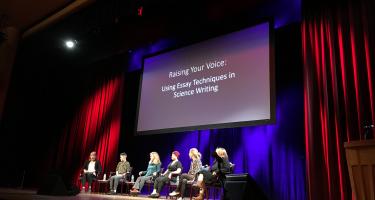
Science may always give the impression of cold hard facts. Yet by adding a personal voice to these "cold hard facts", science writing can create compelling stories that resonate with readers.
Moderator Alison Gillespie thinks her session on optimizing Twitter for science communication should have been named "Taming the beast" because of the barrage of content that is posted on the social media platform.